
INSIGHT

How to Extend Your Air Nailer’s Lifespan Across 3 Key Dimensions
August 13,2026
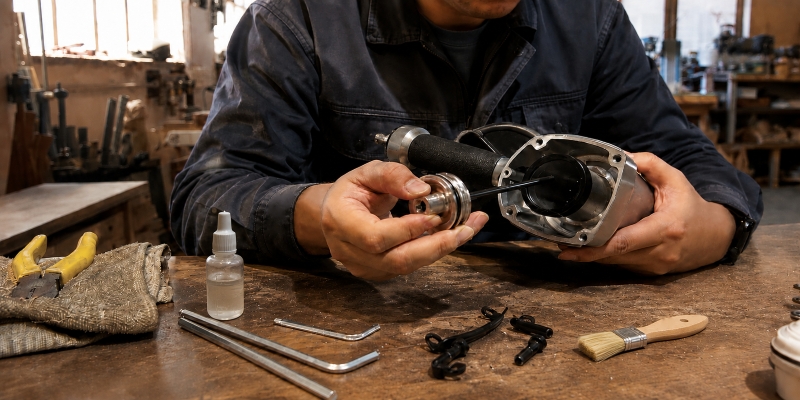
An air nailer—also widely referred to as a pneumatic nailer, air pneumatic nail gun, or air nail gun—is an indispensable workhorse on any job site or woodworking shop. Delivering rapid firing power and high efficiency, these tools are built to withstand tough working conditions. However, because they rely on compressed air, high-speed moving parts, and tight pneumatic seals, failing to care for them properly leads to premature wear, air leaks, and costly downtime.
In this article, we will discuss practical, step-by-step practices for maintaining your air nailer to maximize its performance and ensure a longer operational lifespan. From quick daily checks to periodic deep maintenance and proper storage, taking proactive care of your tool will protect your investment and keep your equipment running like new for years to come.
Daily Air Nailer Maintenance Checklist: Before & After Every Use
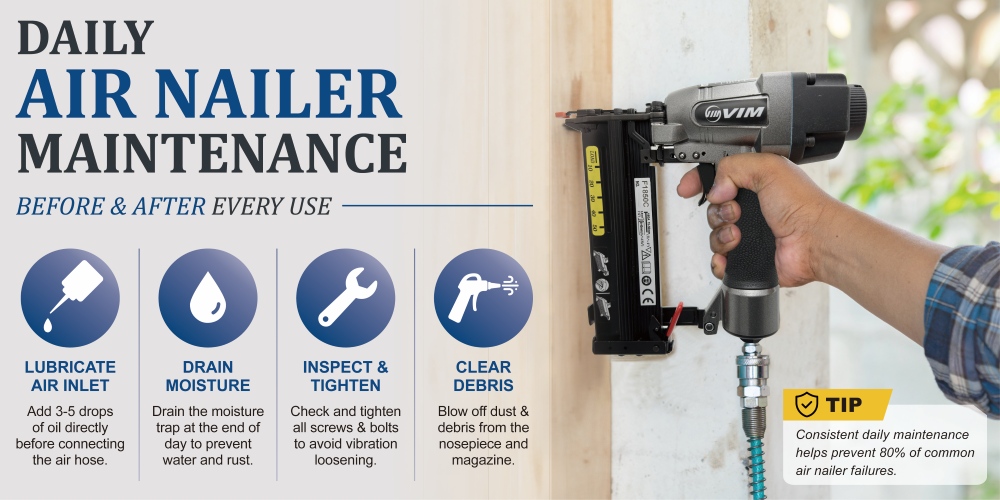
Preventative daily care takes less than two minutes, but it eliminates up to 80% of common air pneumatic nail gun failures.
Lubricate the Air Inlet Daily
Add 3 to 5 drops of specialized pneumatic tool oil directly into the air inlet fitting before connecting the air hose.
- Caution: Never use standard motor oil, WD-40, or aerosol lubricants, as they degrade the internal rubber O-rings.
【Related Products: Refillable Spray Cans AR100 and AR250】
Drain Moisture from the Air Compressor (End of Day)
Moisture builds up inside the compressor tank during operation. Drain the moisture trap frequently to prevent water from entering your air nail gun and causing internal rust.
- Note: For light or occasional DIY use, drain the tank after every project before long-term storage.
Inspect and Tighten Loose Fasteners
The intense vibration from rapid firing can loosen screws and bolts over time. Check and tighten all visible fasteners before start-up.
【Extended reading: 7 Air Nailer Safety and Setup Points You Cannot Afford to Miss】
Clear Debris and Wood Dust
Blow off wood shavings, grit, and dust from the nosepiece, safety contact element, and magazine using clean compressed air.
【Extended reading: 5 Common Driver Unit Problems Every Air Nailer User Should Know】
Weekly & Monthly Deep Care
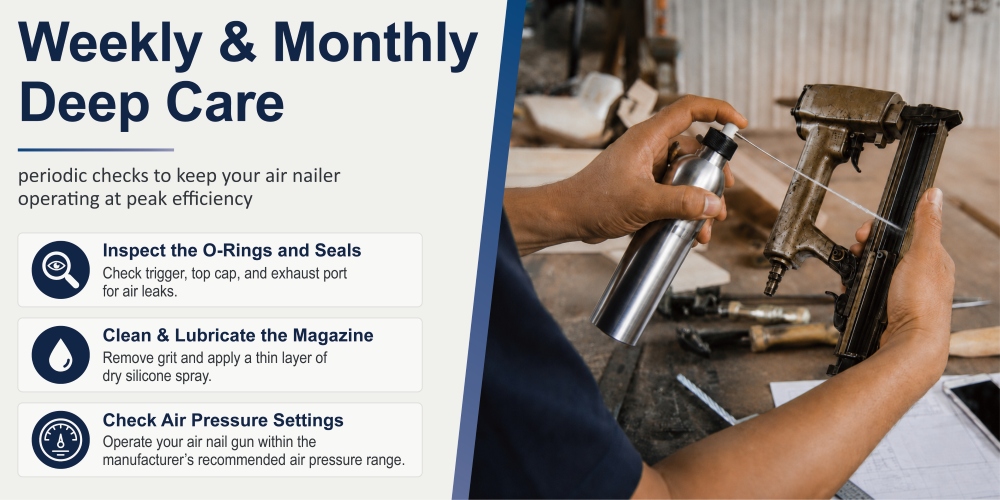
Beyond daily oiling, perform these periodic checks to keep your air nailer operating at peak efficiency.
Inspect the O-Rings and Seals
Check for signs of air leakage around the trigger, top cap, or exhaust port. Replacing a worn O-ring early prevents major internal motor failure.
【Extended reading: Nail Gun Leaking Air from Trigger? Step-by-Step Fix & Prevention】
Clean and Lubricate the Magazine
Grit in the magazine channel prevents nails from feeding smoothly, causing misfires and jams. Wipe the magazine track clean and apply a thin layer of dry silicone spray (avoid wet grease that attracts dust).
【Extended reading: 3 Common Magazine Issues in Air Nailers and How to Fix Them】
Check Air Pressure Settings(PSI vs. kg/cm²)
Always operate your air pneumatic nail gun within the manufacturer’s recommended air pressure range (normally 5–8 kg/cm² or 6–8 Bar). Running excessive air pressure causes unnecessary strain on the driver blade and bumper.
【Extended reading: What Is Driver Blade? Accomplished Knowledge in Original vs. Aftermarket! 】
Storage & Operational Best Practices
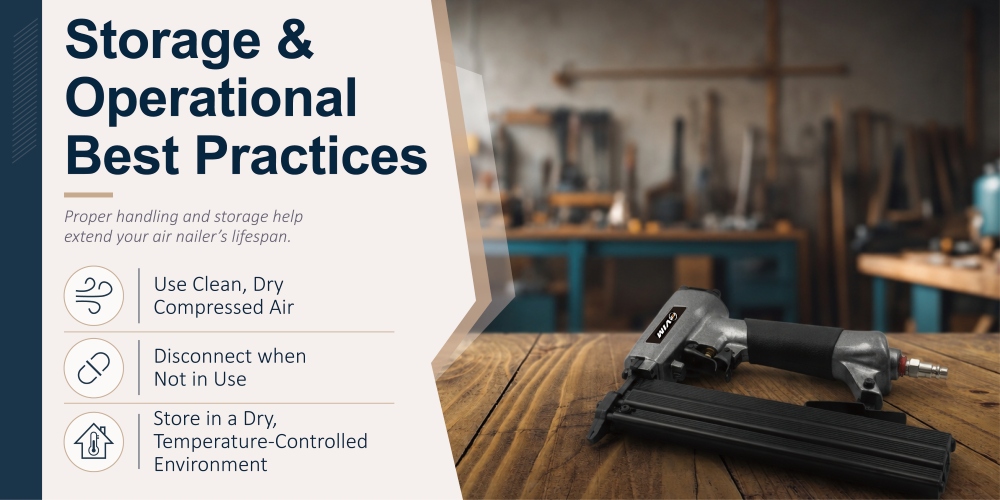
How you handle and store your tool when not in use plays a massive role in its overall lifespan.
Use Clean, Dry Compressed Air
Install an inline air filter and regulator near your workstation to trap water droplets and solid particles before they enter your tool.
【Extended reading: Maximize Tool Performance: 4 Smart Ways to Pick the Best Air Tool Fittings】
Disconnect when Not in Use
Always disconnect the air supply before clearing jams, making adjustments, or storing the tool for the day.
Store in a Dry, Temperature-Controlled Environment
Store your pneumatic nailer in a heavy-duty hard case or dedicated tool cabinet. Moisture in humid environments causes corrosion, while extreme cold can freeze internal rubber components.
【Extended reading: What Technicians Don’t Tell You: 6 Moves to Fixing Driver Units and Restoring Nailers】
FAQ
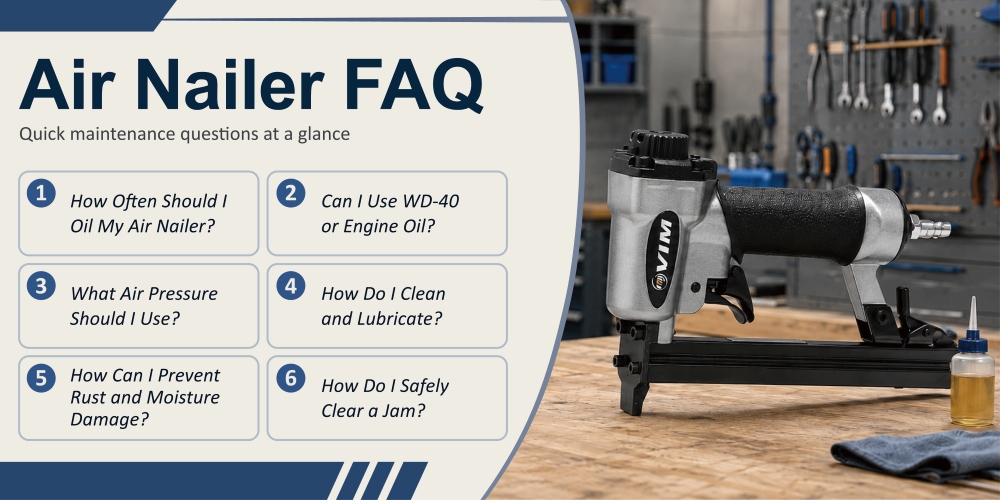
Q1: How Often Should I Oil My Air Nailer?
If you use your air nail gun continuously throughout the workday, add 3 to 5 drops of pneumatic oil at the start of the day and repeat midday. For high-volume production, consider using an inline air lubricator.
【Extended reading: Refillable Spray Can: The Future of Sustainable Refilling Solutions】
Q2: Can I Use WD-40 or Engine Oil to Lubricate My Pneumatic Nailer?
No. Standard engine oils are too thick and leave harmful residue, while WD-40 is a solvent that strips essential grease and damages rubber O-rings. Always use dedicated non-detergent pneumatic tool oil.
Q3: What Air Pressure Setting (kg/cm² or PSI) Should I Use?
Check your manufacturer's manual. Most standard models run between 70 to 120 PSI (roughly 5 to 8 kg/cm²). Operating above the recommended limit accelerates wear on internal bumpers and driver blades.
【Extended reading: How Proper Air Pressure Safeguards Your Pneumatic Tools and Investment】
Q4: How Do I Clean and Lubricate the Internal Components of an Air Nailer?
Beyond daily inlet oiling, thoroughly clean the nosepiece and magazine track weekly using compressed air or a soft brush. For internal components, regular lubrication via the air inlet keeps O-rings pliable—avoid disassembling the body unless replacing internal seals.
Q5: How Can I Protect My Air Nailer from Rust and Internal Moisture Damage?
Always drain your air compressor tank after use to prevent water from entering the air hose. Additionally, install an inline filter-regulator-lubricator (FRL) unit on your air system to trap moisture and ensure continuous, clean lubrication during heavy operation.
Q6: How Do I Safely Clear a Jammed Nail from My Air Pneumatic Nail Gun?
First, always disconnect the air hose. Remove the remaining nail strip from the magazine, then use pliers or a dedicated clearance latch to safely extract the jammed fastener before reconnecting the air supply.
Conclusion
Extending the lifespan of your pneumatic nailer does not require hours of complex labor; it simply demands consistency. By sticking to a simple routine—oiling the air inlet daily, draining compressor moisture, operating within the correct pressure range (kg/cm² or PSI), and keeping components clean—you can prevent up to 80% of common tool failures. Proper maintenance not only saves you money on replacement parts and repairs, but it also ensures consistent firing precision and site safety on every job. Treat your air nail gun with care today, and it will remain a reliable power tool in your workshop for years to come.
Looking for reliable pneumatic tools and precision components built to endure heavy-duty operation? At VIM, we specialize in high-performance air nailers, professional fastening solutions, and durable replacement parts (including driver units, driver blades, and precision seals) engineered for maximum job site efficiency. Contact VIM today to explore our product range or speak with our technical team about customized OEM/ODM and supply solutions for your business!
Article Classification
Recent Articles
- Coil Nailer vs. Strip Nailer: Which One Is Right for Your Job?
- How to Extend Your Air Nailer’s Lifespan Across 3 Key Dimensions
- 7 Air Nailer Safety and Setup Points You Cannot Afford to Miss
- How Proper Air Pressure Safeguards Your Pneumatic Tools and Investment
- Pneumatic vs. Electric Nailer: How to Choose the Best Option for Your Workflow