
INSIGHT

The 4 Hidden Powers of U Crown Mattress Staples in Every Spring
March 04,2026
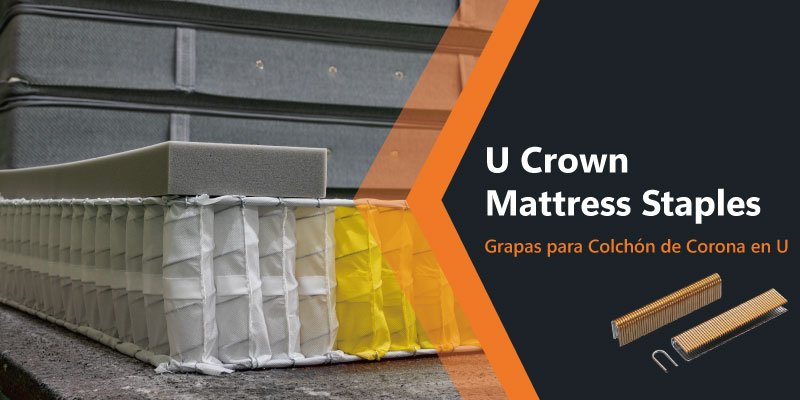
Ever wondered what keeps your mattress springs, padding, and upholstery perfectly in place? The secret is often a small but crucial component: the mattress staple, also known as a U crown staple or round crown U staple. These U-shaped fasteners are specially designed to grip round wires, springs, and layered materials securely, ensuring durability and stability in mattresses, sofas, and other furniture.
In this article, we’ll break down what mattress staples are, how they differ from other U-shaped staples, explore their key industrial applications, and guide you on choosing the right gauge, crown, leg length, and point type for your projects.
What are Mattress Staples: Definition & Uses
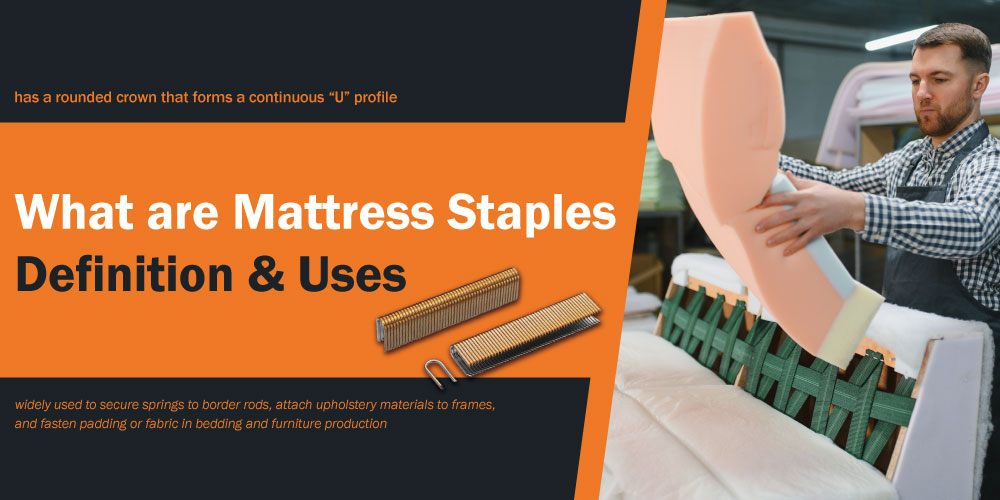
A mattress staple is a specialized U-shaped staple primarily used in mattress manufacturing and upholstery assembly. Unlike regular industrial staples with a flat crown and straight legs, a mattress staple has a rounded crown that forms a continuous “U” profile.
This curved design allows the staple to conform naturally to round wires, springs, or edge rods, providing consistent contact and stable fastening without damaging the components. As a result, mattress staples are widely used to secure springs to border rods, attach upholstery materials to frames, and fasten padding or fabric in bedding and furniture production.
【Related product: Mattress Staples】
Are Mattress Staples and U Staples the Same?
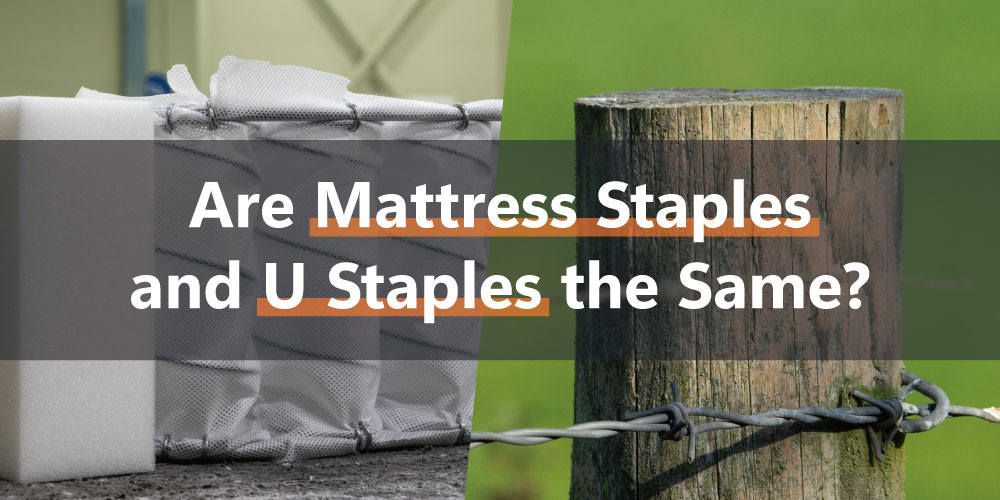
A U staple refers to a broad category of staples formed in a U-shaped configuration, classified by shape rather than application. Within this category, different types of staples are engineered for specific industries and fastening requirements.
Although these fasteners share a similar U-shaped profile, their intended applications can vary significantly. Mattress staples are one type of U staple, specifically designed for bedding and upholstery, while other variants serve entirely different purposes.
Mattress Staples
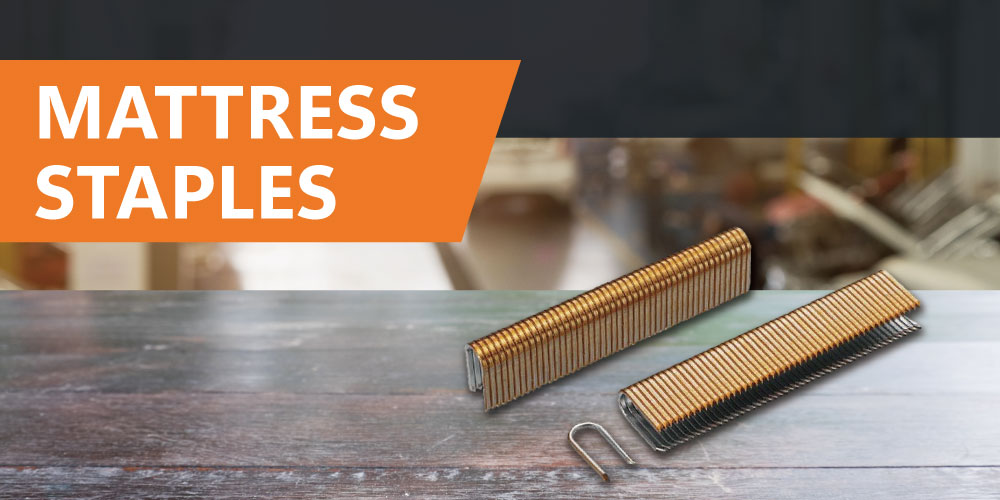
Designed for compatibility with mattress staplers and high-volume production, mattress staples provide consistent fastening performance, proper fit around round components, and stability within multi-layered assemblies.
Fencing Staples

Fencing staples are used in agricultural and construction applications to fasten wire mesh, barbed wire, or fencing materials to wooden posts. They typically feature heavier wires, splayed or barbed legs to maximize holding strength in wood and resist outdoor exposure—prioritizing structural performance over precision in upholstery.
【Extending reading: Know the Mattress Stapler: 5 Unbeatable Advantages for Furniture】
Common Application of Mattress Staples in Industry
Mattress staples play a structural role in bedding, furniture, and specialty seating manufacturing. They are essential for fastening spring systems, support wires, padding layers, and other multi-layered assemblies.
Mattress Manufacturing
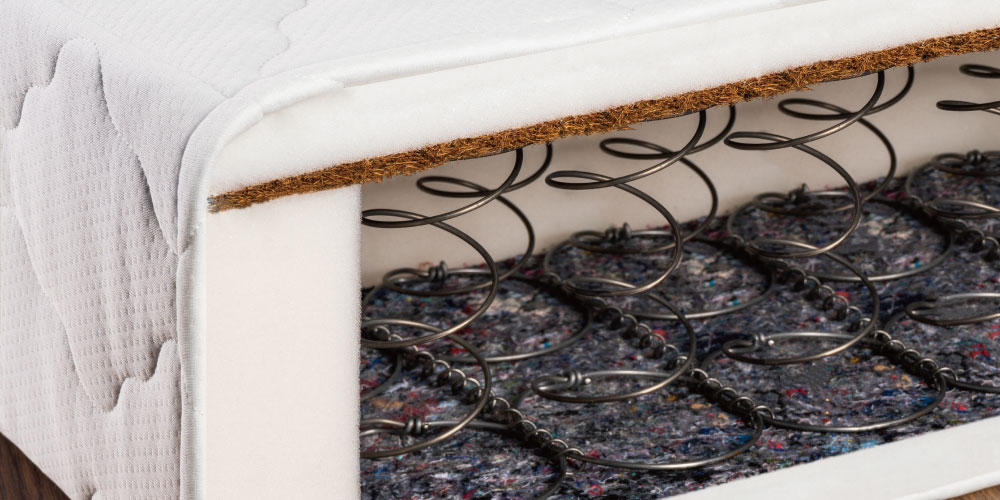
In mattress production, mattress staples are used in Bonnell spring unit assembly, securing spring wires to border rods for proper alignment and structural stability. They also attach insulation pads and fabric layers, preventing shifting during assembly and long-term use.
【Extending reading: Mastering Hog Ring Pliers: 9 Reasons You Need This Essential Tool】
Upholstery & Furniture Repair
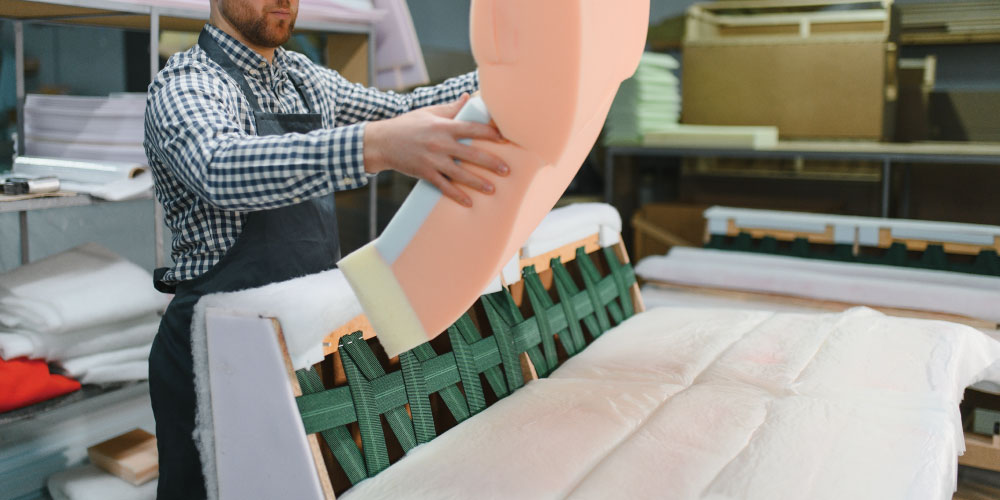
In upholstery manufacturing and repair, mattress staples fasten padding, fabric, and support materials to wooden or metal frames. They are commonly used in sofas, armchairs, and box springs, where internal support structures must be securely attached. Their U-shaped profile allows secure fastening around curved or cylindrical components, restoring structural stability in furniture and seating systems.
【Extending reading: Exploring Different Types of Pneumatic Upholstery Staple Guns】
Bed Frame Assembly
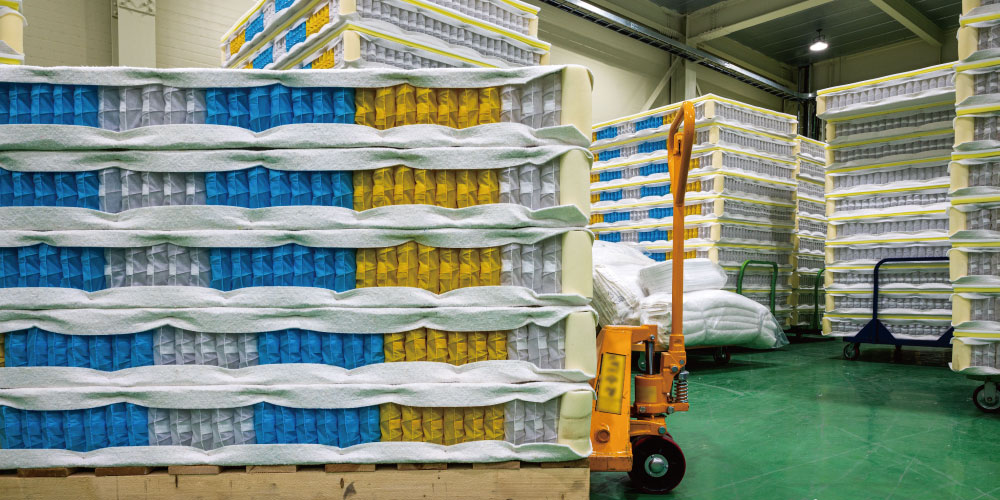
U crown mattress staples secure internal wire grids, corner reinforcements, and fabric coverings in foundations and box springs. They are also applied in foam encasement and edge support assembly, ensuring consistent support across layered materials.
【Extending reading: Increase Your Working Efficiency with Stapling Plier: 3 Key Points to Know Before Selecting】
Specialty Seating Applications

In specialty seating systems, including automotive seats, mattress staples fasten foam encasements, edge supports, seat covers, and internal wire components. The U-shaped design conforms to curved frames and layered materials, providing stable attachment in repetitive assembly operations.
【Extending reading: 4 Reasons You Need Mattress Stapler for Professional Mattress Production】
Buying Guide: How to Choose the Right Mattress Staples
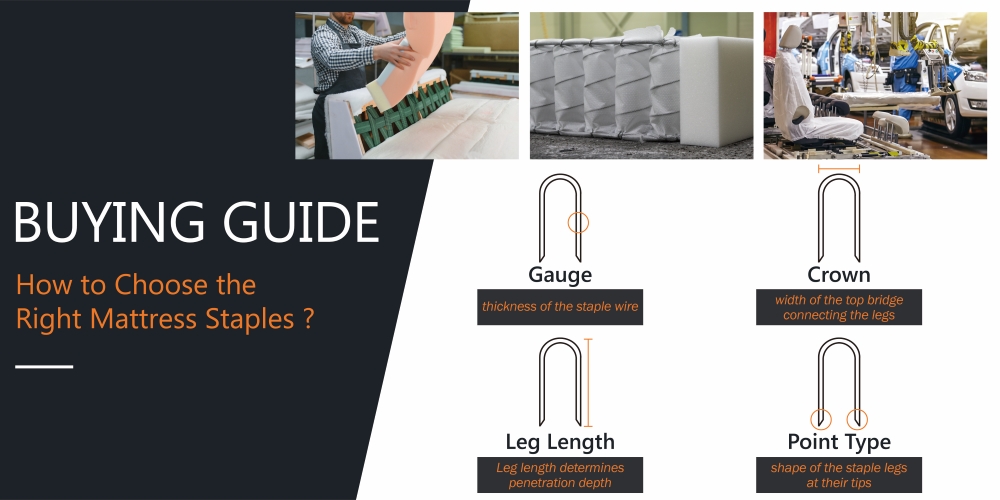
Selecting the appropriate mattress staples ensures proper fastening, consistent performance, and protects both stapler and materials. Key factors include gauge, crown, leg length, and point type.
【Related product: Mattress Stapler】
Gauge
The gauge refers to the thickness of the staple wire. Thicker gauges provide higher holding strength for heavy materials like springs and dense padding, while thinner gauges are easier to drive for lighter layers.
Most common mattress staples are 16 gauge, balancing penetration and holding strength for multi-layered assemblies, border wire attachment, and Bonnell spring units.
【Extending reading: Not Sure Which Gauge to Use? These 4 Points Make It Easy】
Crown
The crown is the width of the top bridge connecting the legs. Wider crowns distribute holding force over larger surfaces, ideal for padding, fabric layers, or insulation pads. Narrow crowns are suited for precise fastening in tight spaces or thinner materials.
【Extending reading: Stop Downtime: 4 Air Stapler Magazine Issues You Can Solve Today】
Leg Length
Leg length determines penetration depth. Longer legs are needed for thicker assemblies, such as multiple padding layers or spring attachments. Shorter legs suit single layers or thinner materials. Correct leg length ensures complete penetration and secure holding without damaging the material or stapler.
【Extending reading: Unlock the Secret of Narrow Crown Staplers: 4 Advantages You Must Know】
Point Type
The point type refers to the shape of the staple legs at their tips, which greatly influences how the staple penetrates and grips the material. The most common point type of mattress staples is the divergent point, where one leg is angled inward and the other outward upon penetration. This configuration enhances lateral holding strength, improves grip in multi-layered or curved materials, and ensures stable fastening in repetitive assembly operations.
【Extending reading: The Hidden Force in Every Staple: 9 Point Types That Make Fastening Last】
Conclusion
Mattress staples play a crucial role in ensuring secure fastening and long-lasting performance in mattresses, upholstered furniture, and specialty seating. Using the right fastening solutions—both the appropriate staples and reliable tools—helps maintain efficiency and stability during assembly.
VIM pneumatic mattress staplers provide a practical solution for precise and consistent fastening. Available in single-shot and double-shot models with 16-gauge mattress staples, these staplers are compatible with 19 mm or 25 mm fastener lengths and feature a long nose that easily reaches deep or narrow workspaces, making repetitive assembly faster and more accurate.
To optimize your production workflow or get advice on the best staples and staplers for your needs, contact us today to discuss your requirements.

Article Classification
Recent Articles
- Nails, Screws, or Staples? Why Wrong Fasteners Might Ruin Your Project
- Stronger Hold, Less Tear-Through: The Power of Plastic Caps
- The 4 Hidden Powers of U Crown Mattress Staples in Every Spring
- 5 Essential Checklist for Choosing Appropriate Flooring Nails
- Every Corrugated Fastener You Want—All Here in One Comprehensive Guide