
INSIGHT
Stronger Hold, Less Tear-Through: The Power of Plastic Caps
May 14,2026
Have you ever wondered why roofing underlayment, house wrap, and plastic sheeting stay securely in place even under demanding jobsite conditions? The answer often lies in choosing the right plastic cap fastening system.
In this guide, we will walk you through everything you need to know about plastic caps, including the differences between stick plastic caps and rolled plastic caps, the tools used for installation, key fastening benefits, and the most common application scenarios. You will also learn how to choose between plastic cap nails and staples, understand brand compatibility differences, and find answers to frequently asked questions before selecting the right option for your project.
Understanding Plastic Cap Options for Nailers and Staplers
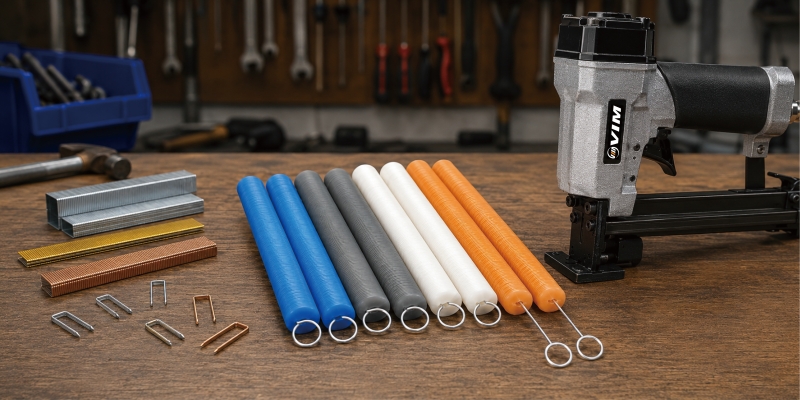
A plastic cap is a collated plastic disc used with a plastic cap nailer or plastic cap stapler to secure roofing underlayment, house wrap, plastic sheeting, and other protective membrane materials to roof decks or wall structures. By increasing the contact surface between the fastener and the material, it helps keep the membrane securely in place during installation.
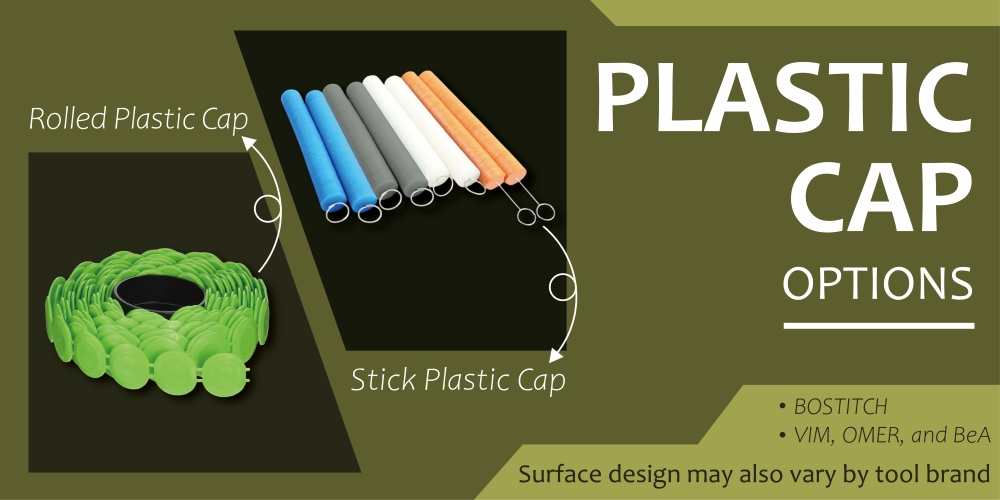
Plastic caps are commonly available in two collations: Stick Plastic Cap and Rolled Plastic Cap, allowing compatibility with different tool feeding systems. Surface design may also vary by tool brand. For BOSTITCH tools, the cap surface typically features a textured tread-like pattern similar to a tire. In contrast, plastic caps for VIM, OMER, and BeA tools usually have a smooth surface without texture, designed to match their specific fastening systems.
【Related products: Plastic Cap】
Tools for Installing Plastic Caps
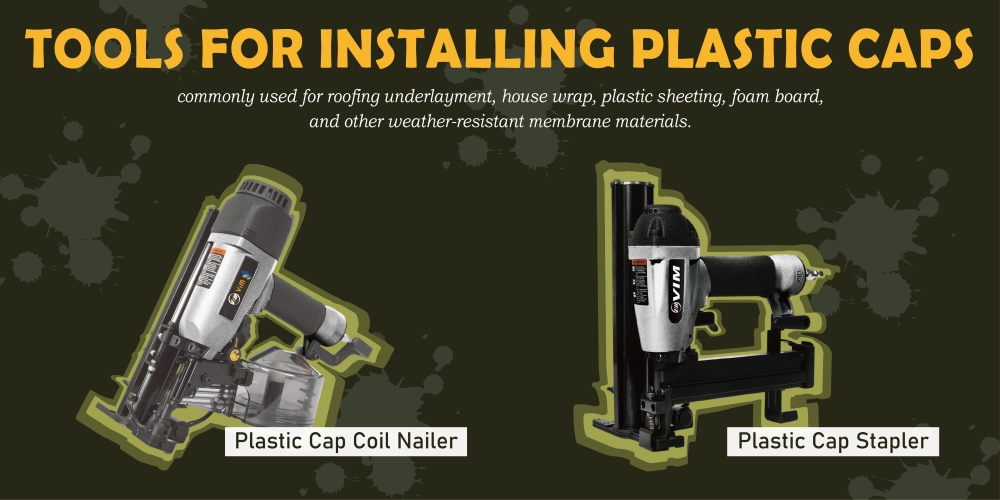
Installing plastic caps requires dedicated tools that feed both the fastener and the collated caps in one operation. The two main options are the Plastic Cap Coil Nailer and the Plastic Cap Stapler, both commonly used for roofing underlayment, house wrap, plastic sheeting, foam board, and other weather-resistant membrane materials.
The choice between these tools usually depends on jobsite preference, local code requirements, and the fastening system specified by the material manufacturer. In most applications, stick plastic caps are typically used for plastic cap staplers, while rolled plastic caps are designed for plastic cap coil nailers to ensure smooth feeding and reliable fastening performance during installation.
【Extended reading: What Are Plastic Cap Fastening Tools? 7 Tips to Choose Your Perfect One】
Benefits of Using Plastic Cap
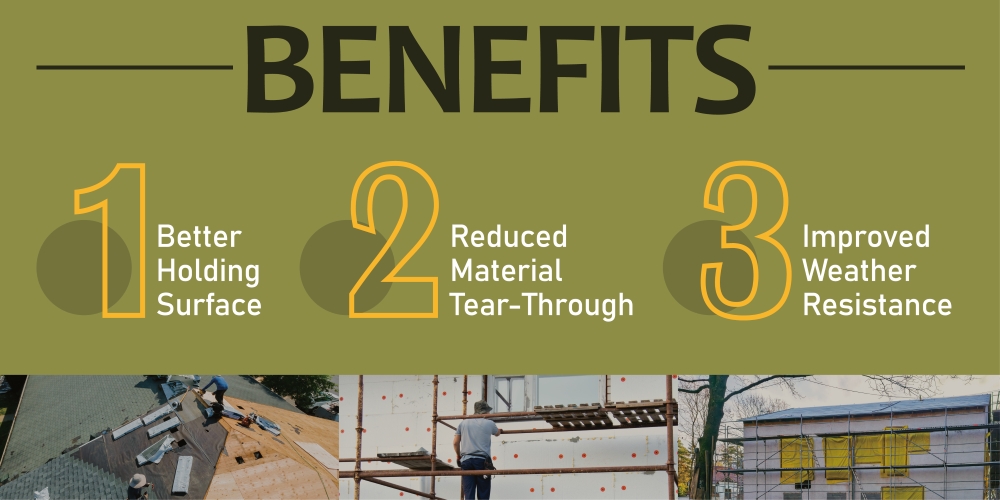
Plastic caps provide several practical advantages in roofing, house wrap, and membrane installation. By increasing the contact area between the fastener and the material, they help improve fastening stability and reduce the risk of damage during installation and exposure to wind or weather.
Better Holding Surface
The wider cap surface helps distribute pressure more evenly across roofing underlayment, house wrap, and plastic sheeting. This allows the fastener to hold the membrane more securely against the roof deck or wall structure.
Reduced Material Tear-Through
Compared with standard nails or staples alone, plastic caps help reduce the chance of the fastener pulling through thin membrane materials. This is especially important during strong wind conditions or when the material is under tension during installation.
Improved Weather Resistance During Installation
Plastic caps help keep roofing felt, synthetic underlayment, and house wrap firmly attached before the final exterior layer is installed. This temporary holding strength is important for maintaining coverage and protection during construction.
【Extended reading: Choosing the Right Coil Nails: 8 Essential Factors for Your Project】
Common Applications and Recommended Fasteners for Plastic Caps
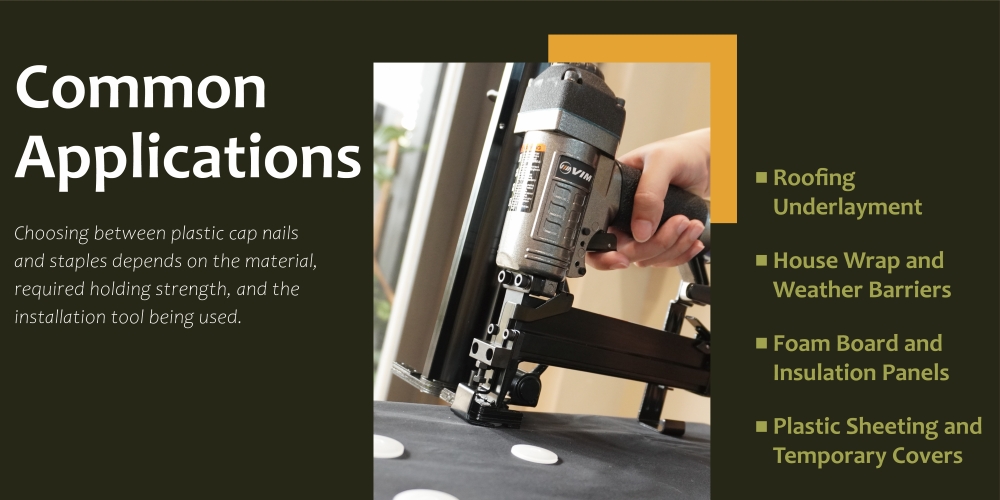
Plastic caps are widely used in roofing, wall protection, and temporary covering applications. Choosing between plastic cap nails and staples depends on the material, required holding strength, and the installation tool being used.
Roofing Underlayment
For roofing felt and synthetic underlayment, plastic cap nails are commonly recommended because they provide strong holding power and reliable performance on roof decks, especially when used with a plastic cap coil nailer.
House Wrap and Weather Barriers
Both plastic cap nails and plastic cap staples are suitable for house wrap installation. Staples are often preferred when faster installation and a flatter fastening profile are required.
Foam Board and Insulation Panels
Plastic cap staples are commonly used for lightweight foam board and insulation sheets, helping keep the material in position without surface damage.
Plastic Sheeting and Temporary Covers
For temporary protective film, tarps, or plastic sheeting, both options can be used depending on the required holding strength and removal needs.
【Extended reading: The Hidden Force in Every Staple: 9 Point Types That Make Fastening Last】
FAQ
When selecting the right plastic cap for roofing, house wrap, or protective membrane installation, buyers often have questions about compatibility, collation type, and the recommended fastening system. The following frequently asked questions can help clarify the most common concerns before choosing plastic cap nails, staples, or compatible tools.
What Is the Difference Between Stick Plastic Caps and Rolled Plastic Caps?
Stick plastic caps are mainly used with plastic cap staplers, while rolled plastic caps are designed for plastic cap coil nailers. The correct collation type should always match the tool feeding system for smooth operation.
Are Plastic Caps Compatible with Different Tool Brands?
Plastic caps are available in different designs for specific tool brands. For example, Bostitch-compatible caps often use a tread-like textured surface, while VIM, OMER, and BeA-compatible caps usually feature a smooth surface.
【Related products: Bostitch Type Plastic Cap】
【Related products: VIM, OMER, and BeA Type Plastic Cap】
Can Plastic Caps Be Used for House Wrap and Plastic Sheeting?
Yes, plastic caps are widely used for securing house wrap, moisture barriers, plastic sheeting, and other temporary protective membranes during construction.
How Do I Choose the Right Plastic Cap for My Tool?
Choose the plastic cap based on the tool type, collation format, compatible brand, and fastening method. Stick plastic caps are typically used for plastic cap staplers, while rolled plastic caps are designed for plastic cap coil nailers.
It is also important to match the cap design with the tool brand. For example, Bostitch-compatible plastic caps usually feature a tread-like textured surface, while VIM, OMER, and BeA-compatible plastic caps typically use a smooth surface design.
Finally, consider the application and whether plastic cap nails or staples are preferred for the required holding strength and installation method.
【Extended reading: All You Need to Know to Choose Your Perfect Air Nailers, Air Staple Guns, and Air Pliers】
Conclusion
Plastic caps play a crucial role in improving the reliability and performance of fastening systems used in roofing, house wrap, and other protective membrane installations. By increasing the contact surface and helping reduce material damage, they provide a more secure and durable solution compared to standard fasteners alone.
Understanding the differences between stick plastic caps and rolled plastic caps, as well as selecting the right plastic cap nailer or plastic cap stapler, ensures better compatibility and smoother installation on the jobsite. When properly matched with the tool, brand, and application, plastic caps help improve efficiency, consistency, and overall fastening quality across a wide range of construction projects.
If you need assistance selecting the right plastic cap for your application, feel free to contact us for professional support.
Article Classification
Recent Articles
- Nails, Screws, or Staples? Why Wrong Fasteners Might Ruin Your Project
- Stronger Hold, Less Tear-Through: The Power of Plastic Caps
- The 4 Hidden Powers of U Crown Mattress Staples in Every Spring
- 5 Essential Checklist for Choosing Appropriate Flooring Nails
- Every Corrugated Fastener You Want—All Here in One Comprehensive Guide