
INSIGHT

4 Simple Ways to Maintain Your Hog Ring Plier for Better Performance
December 17,2025
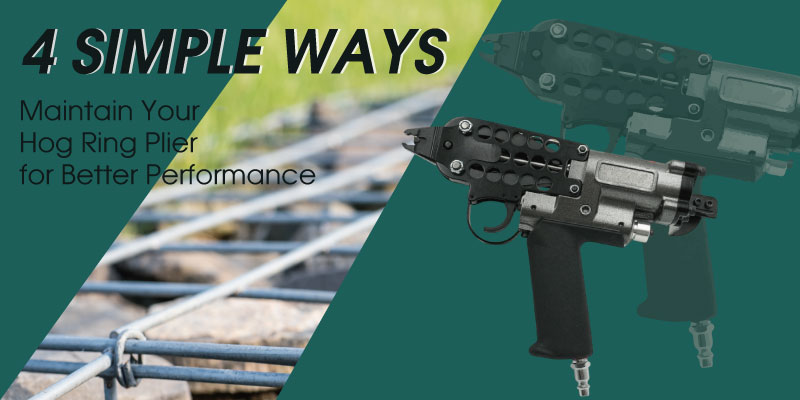
This article provides a comprehensive overview of hog ring pliers, their working principles, and the key components that determine fastening performance. We begin by explaining what a hog ring tool is and why pneumatic models are preferred for high-volume industrial applications. The following sections examine each major internal mechanism—including the jaws, magazine system, driver, piston seals, and trigger valve components—to help users understand how a C-ring is fed, positioned, and formed during operation. Finally, we outline essential daily maintenance practices that prevent jamming, air leaks, weak firing, and inconsistent closure, ensuring reliable performance and longer tool lifespan.
Introduction to C-ring Tools (Hog Ring Pliers)
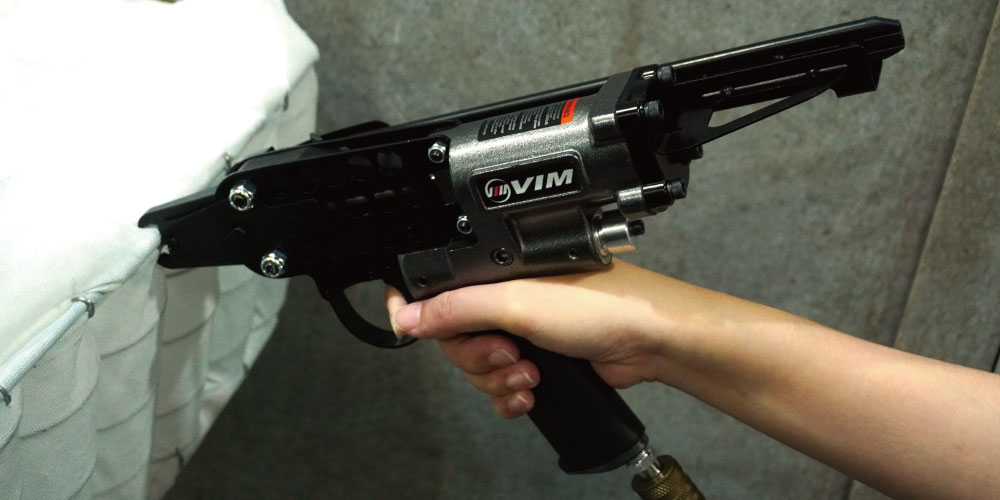 A hog ring plier is a specialized fastening tool designed to clamp a hog ring—a metal C-ring shaped like the letter “C”—around two or more materials. This type of tool is widely used in industries that require strong, durable mechanical connections, including gabion production, wire fencing, automotive seating, mattress manufacturing, pet cages, and various assembly or packaging lines.
While manual hog ring pliers are suitable for light-duty applications, modern industrial environments rely heavily on pneumatic hog ring pliers. By using compressed air as the driving force, a pneumatic C-ring tool delivers faster cycles, stronger closure consistency, and significantly reduced operator fatigue. This boost in efficiency makes it the preferred choice for high-volume, repetitive fastening tasks where precision and reliability are crucial.
【Read More: Mastering Hog Ring Pliers: 9 Reasons You Need This Essential Tool】
【Read More: Why Hog Rings are the Best Fastening Solution and How to Select】
Main Components of a Hog Ring Plier
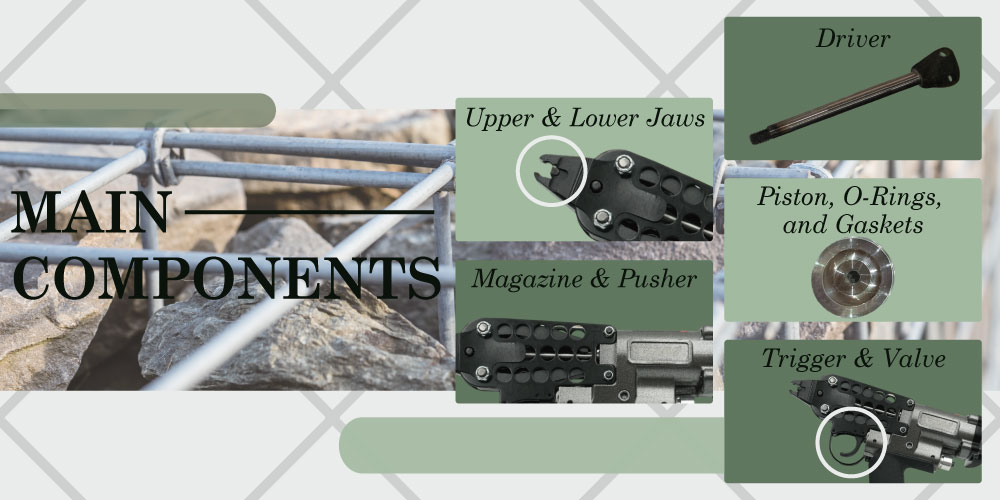 A pneumatic hog ring plier is engineered with several precision components that work together to feed, position, and compress a hog ring (or C-ring) into its final closed shape. Understanding these internal mechanisms is essential for proper maintenance, troubleshooting, and long-term tool reliability.
Upper & Lower Jaws — Forming Mechanism
The jaws are the heart of the tool’s forming system. As the hog ring reaches the jaw area, the upper and lower jaws guide and compress the C-ring into a uniform, secure closure. Any wear or deformation on these jaws directly affects forming accuracy and closure diameter.
Magazine & Pusher — Feeding System
The magazine holds a strip of C-rings and ensures smooth feeding toward the forming area. The pusher maintains consistent forward pressure so each hog ring is positioned correctly for the next cycle. A malfunction in this system often results in jamming or inconsistent feeding.
Driver — Forward-Feeding Component
The driver pushes the hog ring from the magazine into the jaws. It must maintain precise alignment and length to avoid misfires, skipping, or partial feeding. A worn driver is one of the most common causes of feeding failure.
Piston, O-Rings, and Gaskets — Air Sealing & Firing Power
Inside the tool, the pneumatic piston generates the force needed to drive each C-ring. O-rings and gaskets ensure airtight sealing, maintaining consistent pressure. Any leakage in these components reduces firing strength or stops the tool from cycling.
Trigger Components & Valve System
The trigger and internal valve system control air flow during each firing cycle. They regulate when the tool receives air pressure and how quickly the piston activates. Worn valve seals can cause air leaks, weak firing, or complete tool failure.
【Read More: From Car Seats to Fences: 3 Points to Choose the Perfect Hog Ring Size】
【Read More: Stop Guessing: 13 Proven Fastener Materials for Choosing the Right Nails and Staples】
Daily Maintenance for a C-ring Tool
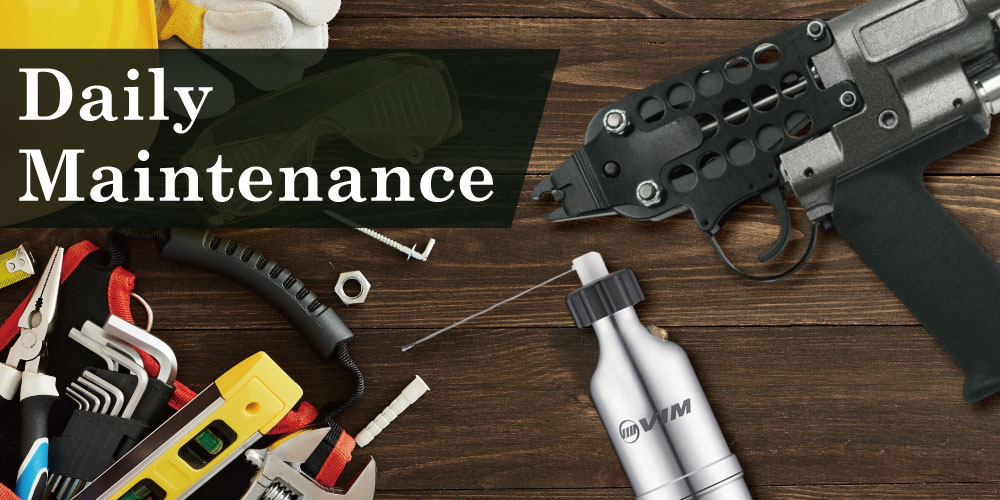 Regular maintenance is essential to keep a hog ring plier operating smoothly and to prevent issues such as misfires, weak firing force, and feeding failures. Because a pneumatic c ring tool relies on air pressure and precise mechanical movement, proper care greatly extends its service life and ensures consistent hog ring performance.
Lubricating the Tool Before First Use and Regularly Thereafter
Before putting the tool into operation, a few drops of pneumatic tool oil should be applied to the air inlet. Continuous lubrication reduces friction, protects internal components, and maintains reliable firing force. For high-volume environments, daily lubrication is recommended.
Steps for Safe Lubrication (Disconnect Air First)
Always disconnect the air hose before applying oil or performing any type of maintenance. This prevents accidental firing and keeps the internal components safe while being serviced.
Cleaning Procedures
To maintain smooth feeding and proper ring formation, routine cleaning is necessary:
- Use an air blower to remove dust, debris, and metal particles from the tool body and magazine.
- Avoid gasoline or volatile cleaners, as these substances can damage internal seals or create safety hazards.
- Use a lightly oiled cloth to wipe the surface and remove dirt without harming the tool’s finish or internal seals.
Importance of Proper Lubrication for Long-Term Performance
Consistent lubrication prevents wear on the piston, driver, and forming components, ensuring stable pressure and smooth movement. Well-maintained tools deliver more accurate c ring closure, fewer jams, and reduced downtime—critical advantages for any production environment relying on fast and consistent hog ring fastening.
【Read More: Not Sure Which Gauge to Use? These 4 Points Make It Easy】
【Read More: Make Every Connection Count: 4 Clear Strategies to Choose the Best Fastener Materials】
Conclusion
Keeping a hog ring plier in optimal condition depends on understanding its internal structure, recognizing early signs of wear, and performing consistent lubrication and cleaning. With proper maintenance, the tool maintains strong firing power, smooth feeding, and precise C-ring closure—minimizing downtime and improving workflow efficiency in any industrial environment that relies on high-volume fastening.
At VIM International, we provide a full range of hog ring pliers and industrial-grade hog rings (C-rings) engineered for demanding applications such as gabion production, wire fencing, upholstery, mattress manufacturing, automotive seating, and cage assembly. Our tools are designed for durability, stability, and smooth operation, while our C-rings are manufactured with strict wire tolerance and consistent hardness to ensure clean forming and minimal jamming.
Whether you need reliable pneumatic hog ring tools for daily production, high-quality C-rings for consistent closure performance, or support in selecting the right fastening solution for your industry, our team is ready to assist. We are committed to helping manufacturers improve efficiency, reduce downtime, and achieve more stable fastening results across all operational environments.
Get Started with VIM Today
Enhance your fastening program with VIM’s reliable tools and exceptional customer service. Visit VIM's website or contact us directly to learn more about our offerings and how we can support your projects.
【Read More: Why Finishing Matters More Than You Think: 4 Mistakes to Avoid in Fastener Coating Selection】
【Read More: 14 Surface Treatments That Matter: A Closer Look at Fastener Finishing】
Article Classification
Recent Articles
- Coil Nailer vs. Strip Nailer: Which One Is Right for Your Job?
- How to Extend Your Air Nailer’s Lifespan Across 3 Key Dimensions
- 7 Air Nailer Safety and Setup Points You Cannot Afford to Miss
- How Proper Air Pressure Safeguards Your Pneumatic Tools and Investment
- Pneumatic vs. Electric Nailer: How to Choose the Best Option for Your Workflow